Understanding How IPTV Technology Works
Television has evolved dramatically over the last two decades. Traditional cable and satellite services are no longer the only way to watch live TV, movies, and on-demand content. Today, millions of viewers worldwide are switching to
Best IPTV UK because it offers greater flexibility, higher-quality streaming, and access to entertainment across multiple devices.
But what exactly is IPTV, and how does it work?
Unlike conventional broadcasting methods that rely on satellite signals or cable infrastructure, IPTV (Internet Protocol Television) delivers television content through Internet Protocol (IP) networks. Instead of broadcasting every channel simultaneously, IPTV sends only the content requested by the viewer, making it a more efficient and personalized method of content delivery. IPTV systems typically rely on streaming protocols, content delivery networks (CDNs), and technologies such as unicast and multicast to deliver live and on-demand video efficiently.
This guide explains everything you need to know about how IPTV technology works, its components, benefits, challenges, and why it has become one of the fastest-growing methods of watching television.
What Is IPTV?
IPTV stands for Internet Protocol Television. It is a digital television broadcasting technology that delivers TV channels, movies, sports, and video-on-demand content through internet networks instead of traditional terrestrial, satellite, or cable systems.
Unlike conventional TV, where channels are continuously broadcast to every viewer, IPTV only delivers the specific content requested by the user. This method improves bandwidth efficiency and creates a more interactive viewing experience.
With a stable broadband internet connection, users can stream content on:
- Smart TVs
- Android TV Boxes
- Amazon Fire TV Stick
- Apple TV
- Smartphones
- Tablets
- Computers
- Gaming consoles
Because everything is transmitted over IP networks, viewers can enjoy television wherever they have internet access.
How IPTV Technology Works
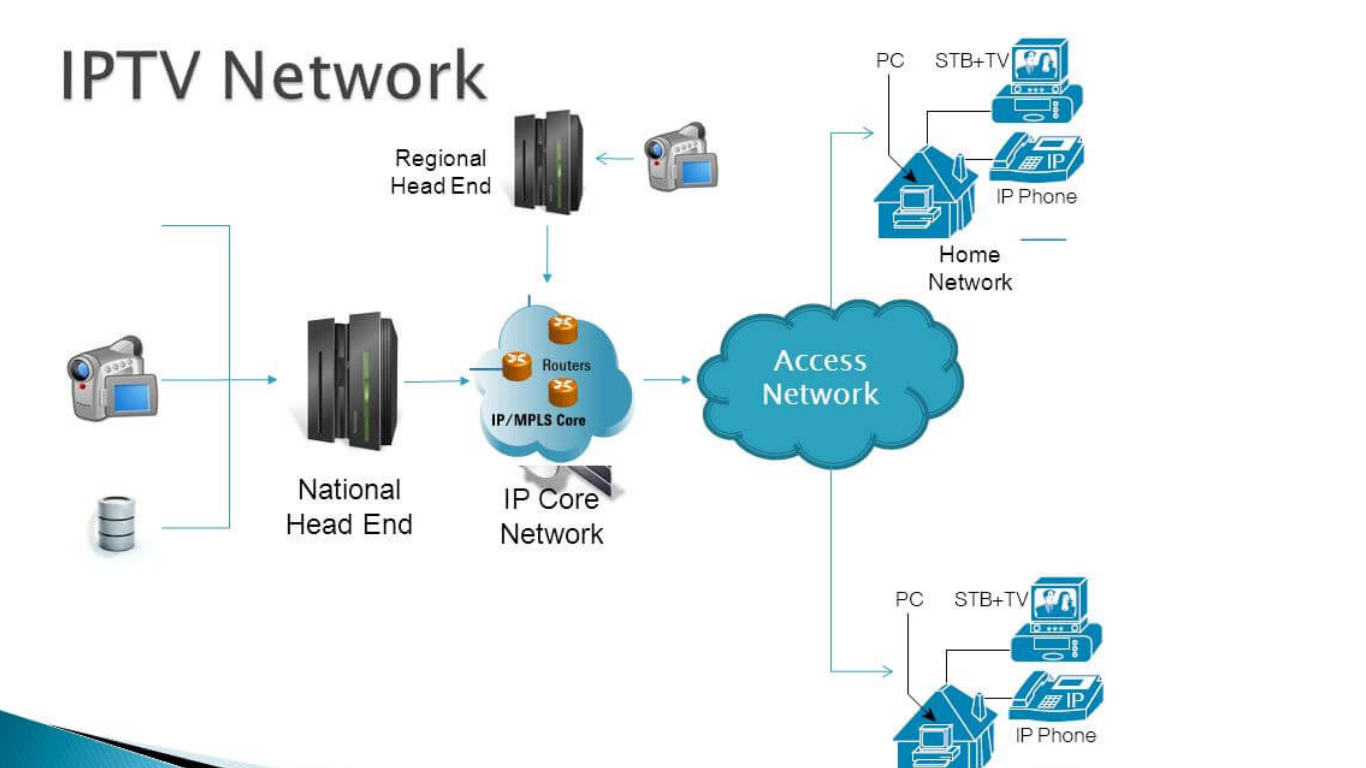
At its core, IPTV functions by converting television signals into digital data packets that travel through internet networks before being reassembled on your viewing device.
The process typically follows these steps:
1. Content Acquisition
Everything starts with the content provider.
The provider collects media from multiple sources, including:
- Live television channels
- Sports broadcasts
- News networks
- Movies
- TV series
- Premium entertainment channels
Some content arrives via satellite feeds, while others come directly from broadcasters or media partners.
2. Encoding and Compression
Raw video files are extremely large.
To make streaming practical, the content is encoded using modern compression technologies such as:
Compression significantly reduces bandwidth usage while maintaining high picture quality.
This allows viewers to stream Full HD and even 4K content without excessive internet consumption.
3. Content Storage
After encoding, videos are stored on secure media servers.
These servers organize:
- Live TV streams
- Video on Demand (VOD)
- Catch-up TV
- Recorded programs
Large IPTV providers often operate multiple servers worldwide for better reliability and faster delivery.
4. Content Delivery Network (CDN)
Instead of sending every stream from one location, providers use Content Delivery Networks.
A CDN distributes copies of media across multiple geographic servers.
Benefits include:
- Lower buffering
- Reduced latency
- Faster loading
- Better streaming quality
- Improved reliability
The closer the server is to the viewer, the better the streaming experience becomes.
5. Internet Transmission
When a viewer selects a channel or movie, the IPTV server sends digital packets through the internet.
Unlike traditional broadcasting, only the requested content is transmitted.
This makes IPTV extremely bandwidth-efficient.
6. Decoding on the Device
Your Smart TV or
UK IPTV streaming device receives these packets and decodes them into audio and video.
Within seconds, the selected content begins playing smoothly.
Main Components of an IPTV System
A complete IPTV system contains several important components.https://iptvuk.lat/pricing
Content Provider
Provides television channels, movies, sports, and entertainment.
Encoder
Converts raw video into digital streaming formats.
Middleware
Acts as the management system that controls:
- User authentication
- Channel lists
- Electronic Program Guide (EPG)
- Billing
- Subscription management
Streaming Server
Stores and delivers media to users.
CDN
Improves global content delivery.
End User Device
Displays the video stream on televisions, smartphones, or computers.
Types of IPTV Services
Most IPTV platforms offer three major content categories.
Live Television
This works similarly to traditional TV.
Users can watch:
- Sports
- News
- Entertainment
- Kids channels
- International channels
Live IPTV often uses multicast technology within managed networks to efficiently deliver the same stream to many viewers at once.
Video on Demand (VOD)
Users choose what they want to watch.
Examples include:
- Movies
- TV shows
- Documentaries
Unlike live TV, VOD uses unicast streaming, where a dedicated stream is sent to an individual viewer.
Catch-Up TV
Catch-Up TV allows viewers to watch programs that aired earlier.
Many IPTV providers store broadcasts for several days.
Users simply select the missed program and begin watching.
Streaming Protocols Used by IPTV
Several protocols make IPTV possible.
These include:
Modern IPTV systems often use adaptive streaming methods that automatically adjust video quality based on available bandwidth.
Unicast vs Multicast
These are two important technologies used in IPTV delivery.
Unicast
One server sends one stream to one user.
Perfect for:
- Movies
- TV series
- Personal viewing
Multicast
One server sends one stream to many users simultaneously.
Ideal for:
- Live football
- News
- Live events
- Television channels
Multicast dramatically reduces bandwidth consumption by sending a single stream that network equipment replicates only where needed, making it highly efficient for live broadcasting.
Advantages of IPTV
The popularity of IPTV continues to grow because of its many advantages.
Better Flexibility
Watch anywhere with internet access.
On-Demand Entertainment
Choose exactly what you want to watch.
High Picture Quality
Many providers support:
Multi-Device Compatibility
Watch on:
- Phones
- Tablets
- Smart TVs
- Laptops
Interactive Features
Many IPTV platforms include:
- Pause Live TV
- Rewind
- Catch-Up
- Cloud Recording
- Electronic Program Guide
Internet Speed Requirements
Streaming quality depends on internet speed.
Recommended speeds:
| |
| SD | 5 Mbps |
| HD | 10 Mbps |
| Full HD | 20 Mbps |
| 4K UHD | 30–50 Mbps |
A wired Ethernet connection usually provides the most stable performance.
Security in IPTV
Professional IPTV providers invest heavily in security.
Common technologies include:
- User authentication
- Encrypted streaming
- Secure servers
- DRM (Digital Rights Management)
- Anti-piracy systems
These features help protect both content providers and subscribers.
Challenges Facing IPTV
Although IPTV offers many advantages, there are still challenges.
These include:
- Internet dependency
- Network congestion
- Buffering during poor connections
- Server overload
- Device compatibility issues
Reliable infrastructure and quality service providers minimize these problems.
IPTV vs Traditional Cable TV
| Feature | IPTV | Cable TV |
| Internet Required | Yes | No |
| On-Demand Content | Yes | Limited |
| Watch Anywhere | Yes | Usually No |
| Multi-Device Support | Yes | Limited |
| Interactive Features | Yes | Basic |
| Installation | Easy | Professional Installation Often Required |
The Future of IPTV
The future of IPTV looks extremely promising.
Emerging technologies are expected to improve IPTV even further, including:
- Artificial Intelligence recommendations
- 8K streaming
- Cloud DVR
- Faster fiber internet
- Low-latency live streaming
- Improved content personalization
Industry research also points to ongoing work on quality of service, advanced codecs, and standardized architectures to improve scalability and viewer experience.
Tips for Choosing a Reliable IPTV Provider
- Stable servers
- HD and 4K support
- Fast customer support
- Electronic Program Guide (EPG)
- Catch-Up TV
- VOD library
- Device compatibility
- Secure payment methods
If you're looking for reliable IPTV services and more information, visit https://iptvuk.lat/.
Frequently Asked Questions
Is IPTV legal?
IPTV technology itself is completely legal. Legality depends on whether the provider has the proper rights and licenses to distribute the content being offered.
Does IPTV require fast internet?
Yes. HD streaming generally requires at least 10 Mbps, while 4K content benefits from 30 Mbps or more.
Can I watch IPTV on multiple devices?
Most providers support Smart TVs, Android devices, iPhones, tablets, computers, and streaming devices. The number of simultaneous streams depends on your subscription.
Why does IPTV sometimes buffer?
Buffering is usually caused by slow internet speeds, Wi-Fi interference, network congestion, or overloaded servers.
What equipment do I need?
Most users only need a compatible device and a stable broadband internet connection. Some services also recommend a dedicated streaming box for the best experience.
Is IPTV better than cable?
For many users, IPTV offers greater flexibility, more on-demand content, and support for multiple devices. However, the experience depends on the internet quality and the reliability of the provider.
Conclusion
IPTV has fundamentally changed the way people consume television by replacing traditional broadcast methods with internet-based streaming. Through advanced encoding, secure servers, content delivery networks, and efficient streaming technologies, IPTV delivers live channels, movies, sports, and on-demand content with impressive flexibility and quality.
As internet infrastructure continues to improve and streaming technology advances, IPTV is expected to become an even more important part of home entertainment. Whether you are watching live sports, catching up on missed shows, or enjoying a movie on demand, IPTV provides a modern, convenient, and personalized viewing experience.
To learn more about IPTV services and explore available options, visit https://iptvuk.lat/.