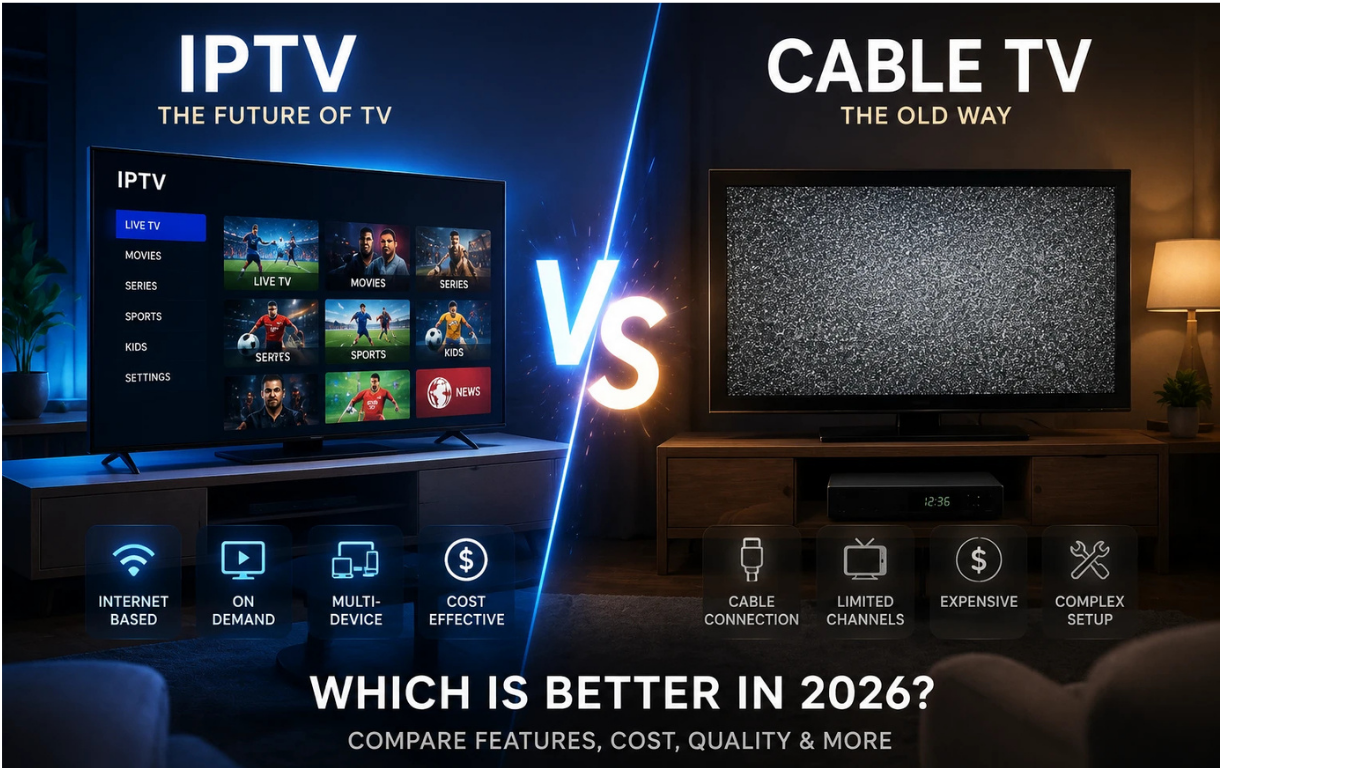
Television has changed dramatically in recent years. Traditional cable TV was once the standard way to watch live channels, movies, sports, and entertainment. Today, many viewers are exploring internet-based alternatives for greater flexibility, broader device support, and better control over their viewing experience.
The comparison between IPTV vs. cable TV is becoming increasingly important for households deciding whether to continue with traditional television services or move toward modern streaming solutions. Both options have advantages and disadvantages, and the right choice depends on your budget, internet connection, viewing habits, and content preferences.
This complete guide explains how
IPTV UK and cable TV work, compares their features, and helps you understand which option may suit your entertainment needs.
What Is IPTV?
IPTV (Internet Protocol Television) is a television delivery system that uses internet networks to transmit television content instead of traditional cable infrastructure.
Unlike cable TV, where channels arrive through physical cable lines, IPTV sends video streams through an internet connection. Users can watch content through compatible applications and devices such as smart TVs, smartphones, tablets, computers, and streaming devices.
Modern IPTV technology allows viewers to access live television, video-on-demand content, and time-shifted programs through internet-based platforms. Research on IPTV highlights its flexibility, interactive features, and ability to combine television services with internet-based technologies.
A typical IPTV setup requires:
- A stable internet connection
- A compatible device
- An IPTV application or player
- A legitimate IPTV subscription or service provider
What Is Cable TV?
Cable TV is a traditional television service that delivers channels through physical cable networks. These networks commonly use coaxial cables or fiber-based infrastructure to transmit television signals directly to homes.
Cable providers usually offer packages containing different channel groups, including entertainment, sports, news, and premium channels. Customers typically receive a set-top box connected to their television.
Cable TV has been popular for decades because of its reliability and simple channel experience. It does not depend on home internet for television delivery, which remains one of its biggest advantages.
IPTV vs Cable TV: Key Differences
The biggest difference between IPTV and cable TV is the method used to deliver content.
| Delivery Method | Internet connection | Cable infrastructure |
| Installation | Usually simple setup | Professional installation often required |
| Device Support | Multiple devices | Mainly TV boxes |
| Flexibility | High | Limited |
| Internet Required | Yes | No |
| Content Access | Live TV + on-demand options | Traditional channel packages |
| Mobility | Watch anywhere with internet | Usually home-based |
Cost Comparison Between IPTV and Cable TV
One of the main reasons viewers compare IPTV vs Cable TV is cost.
Cable TV packages often include additional charges such as equipment rental, installation fees, premium channel upgrades, and contract-related costs. Many users pay more because they subscribe to large channel packages even when they watch only a small number of channels.
IPTV services generally use a subscription model and may offer more flexible packages. However, prices vary depending on the provider, features, and included content.
Cable TV Costs May Include:
- Monthly package fees
- Receiver or box rental
- Installation charges
- Premium channel fees
- Contract commitments
IPTV Costs May Include:
- Subscription fees
- Internet service costs
- Compatible streaming devices
For users who already have a reliable internet connection, IPTV can be an attractive option because it avoids many traditional television equipment costs.
Channel Selection and Content Variety
Content availability is another major difference between IPTV and cable TV.
Cable television usually provides channels based on predefined packages. Customers often need to upgrade plans to access premium sports, international channels, or additional entertainment options.
IPTV platforms can provide access to a wide range of content categories depending on the service provider, including:
- Live television
- International channels
- Movies
- TV series
- Sports content
- On-demand programming
However, users should always choose legitimate services that have proper rights to distribute content.
Picture Quality and Streaming Experience
Both IPTV and cable TV can provide high-quality viewing experiences, but the technology behind them is different.
Cable TV quality depends on the provider's network infrastructure and equipment. IPTV quality depends heavily on internet speed, network stability, and streaming technology.
A strong internet connection can allow IPTV users to enjoy:
- HD streaming
- 4K content where available
- Multi-device viewing
- Flexible playback options
Poor internet performance may cause:
- Buffering
- Delays
- Quality drops
Cable TV generally offers stable performance because the television signal does not rely on internet bandwidth.
Device Compatibility and Flexibility
One of the biggest advantages of IPTV is device flexibility.
Traditional cable TV usually requires a dedicated television connection and provider equipment. IPTV can work across multiple platforms.
Users may watch IPTV on:
- Smart TVs
- Android devices
- Tablets
- Smartphones
- Computers
- Streaming boxes
This flexibility matches modern viewing habits because many people no longer watch television only from a traditional TV set.
Reliability and Internet Requirements
Reliability is an important factor when comparing IPTV vs Cable TV.
Cable TV has an advantage because it can continue working even when home internet service experiences problems.
IPTV requires a stable internet connection. The viewing experience depends on:
- Internet speed
- Network stability
- Service quality
- Device performance
For households with reliable broadband internet,
Best IPTV can provide a smooth experience. For areas with unstable internet connections, cable may remain a practical choice.
Advantages of IPTV
1. Greater Flexibility
IPTV allows users to watch content on different devices instead of being limited to a single television setup.
2. Modern Viewing Experience
Many IPTV platforms support features such as:
- On-demand viewing
- Pause and replay options.
- Multi-device access
3. Easy Setup
Many IPTV solutions require only an application installation and account setup.
4. Suitable for International Viewers
People who want access to international programming may find IPTV platforms more convenient.
Advantages of Cable TV
1. Reliable Performance
Cable TV does not depend on internet speed, making it stable in many situations.
2. Simple User Experience
Many households prefer the traditional channel-changing experience provided by cable boxes.
3. Local Channel Availability
Cable providers often offer strong access to local channels and regional programming.
4. Customer Support
Established cable companies usually provide structured customer service and technical support.
IPTV vs Cable TV Comparison Table
| Lower Cost | IPTV |
| No Internet Required | Cable TV |
| Multiple Devices | IPTV |
| Traditional Experience | Cable TV |
| Flexible Viewing | IPTV |
| Stability Without Internet | Cable TV |
| Modern Features | IPTV |
| Simple Setup | IPTV |
Is IPTV Better Than Cable TV?
The answer depends on your personal needs.
IPTV may be better for you if you want:
- Flexible viewing options
- Multiple device support
- Modern streaming features
- Internet-based entertainment
Cable TV may be better if you want:
- Maximum reliability
- Traditional television experience
- Local channels without internet dependence
For many modern viewers, IPTV represents a more flexible approach to television. However, cable TV remains useful for people who prefer traditional services and consistent performance.
The best choice is not simply about technology; it is about selecting the service that matches your lifestyle.
Frequently Asked Questions (FAQs)
What is the main difference between IPTV and cable TV?
The main difference is delivery method. IPTV uses internet networks to deliver television content, while cable TV uses physical cable infrastructure.
Is IPTV cheaper than cable TV?
IPTV can be less expensive in many situations, especially for users who already have internet service. Actual costs depend on the provider and package.
Does IPTV require internet?
Yes. IPTV requires a stable internet connection because television content is delivered through online networks.
Does cable TV work without internet?
Yes. Traditional cable TV does not require internet because it receives signals through cable infrastructure.
Which has better picture quality: IPTV or cable TV?
Both can provide high-quality video.
IPTV quality depends on internet speed and service quality, while cable quality depends on provider infrastructure.
Can I watch IPTV on multiple devices?
Many IPTV platforms support multiple devices, including smart TVs, mobile devices, computers, and streaming players.
Is IPTV replacing cable TV?
IPTV and other streaming technologies are changing how people watch television, but cable TV continues to serve many households.
Internal Link Plan
| Introduction | IPTV services | IPTV service page | Improve commercial navigation |
| IPTV section | How IPTV works | IPTV guide page | Build topical authority |
| Cost section | IPTV subscription plans | Pricing page | Support conversions |
| Device section | IPTV supported devices | Device compatibility page | Answer user questions |
| FAQ section | IPTV setup guide | Tutorial page | Improve engagement |
Sources
- IPTV technology research and technical overview:
- IPTV and cable comparison references:
- Cost and feature comparison discussions:
Suggested Schema
Recommended schema types:
- Article Schema
- FAQ Schema
- Breadcrumb Schema
Image Plan
This article would benefit from approximately 3 images.
- Placement: After introduction
- Purpose: Show IPTV vs Cable TV concept
- File name: iptv-vs-cable-tv-comparison.jpg
- Alt text: IPTV vs Cable TV comparison guide
- Ratio: 16:9
- Prompt: "Modern living room showing IPTV streaming setup compared with traditional cable television box"
- Placement: Comparison table section
- Purpose: Visual comparison
- File name: iptv-cable-tv-features-comparison.jpg
- Alt text: Features comparison between IPTV and cable TV
- Ratio: 16:9
- Prompt: "Clean infographic comparing IPTV internet television and cable TV features"
- Placement: Device compatibility section
- Purpose: Show IPTV flexibility
- File name: iptv-supported-devices.jpg
- Alt text: Devices that support IPTV streaming
- Ratio: 16:9
- Prompt: "Smart TV, smartphone, tablet, and laptop displaying IPTV streaming content"
This article would benefit from approximately 3 images. Would you like me to generate them? Reply “Generate images.”
What would you like to do next?
- Generate images — reply ‘Generate images.’
- Translate — provide the language and country.
- Create an internal-link plan.
- Convert to Google SERP, AEO, GEO, or SEO mode.
- Explore WriterGPT: https://writer-gpt.com/
- Get lifetime access: https://writer-gpt.com/#pricing
Get 50% off with code: ENJOY50.