IPTV TechnologyA Complete Guide to How IPTV Works
The television industry has changed dramatically over the past decade. Traditional cable and satellite television are gradually being replaced by internet-based streaming solutions that offer greater flexibility, higher quality, and more control. One of the most important innovations driving this transformation is IPTV technology.
Unlike conventional broadcasting methods,
IPTV UK delivers television content through internet protocol (IP) networks instead of satellite signals or cable infrastructure. This approach enables viewers to access live television, movies, sports, and video-on-demand services from almost any internet-connected device.
Whether you use a Smart TV, Android TV Box, Amazon Firestick, smartphone, tablet, or computer, IPTV makes it possible to enjoy entertainment whenever and wherever you want.
What Is IPTV?
IPTV stands for Internet Protocol Television. It is a method of delivering television content using internet networks instead of traditional broadcasting technologies like satellite, terrestrial antennas, or cable systems.
Rather than broadcasting every television channel simultaneously, IPTV streams only the content a viewer selects. This allows for a more efficient and personalised viewing experience.
With IPTV, users can access:
- Live television channels
- Sports broadcasts
- Movies
- TV series
- Video on Demand (VOD)
- Catch-up television
- Time-shifted content
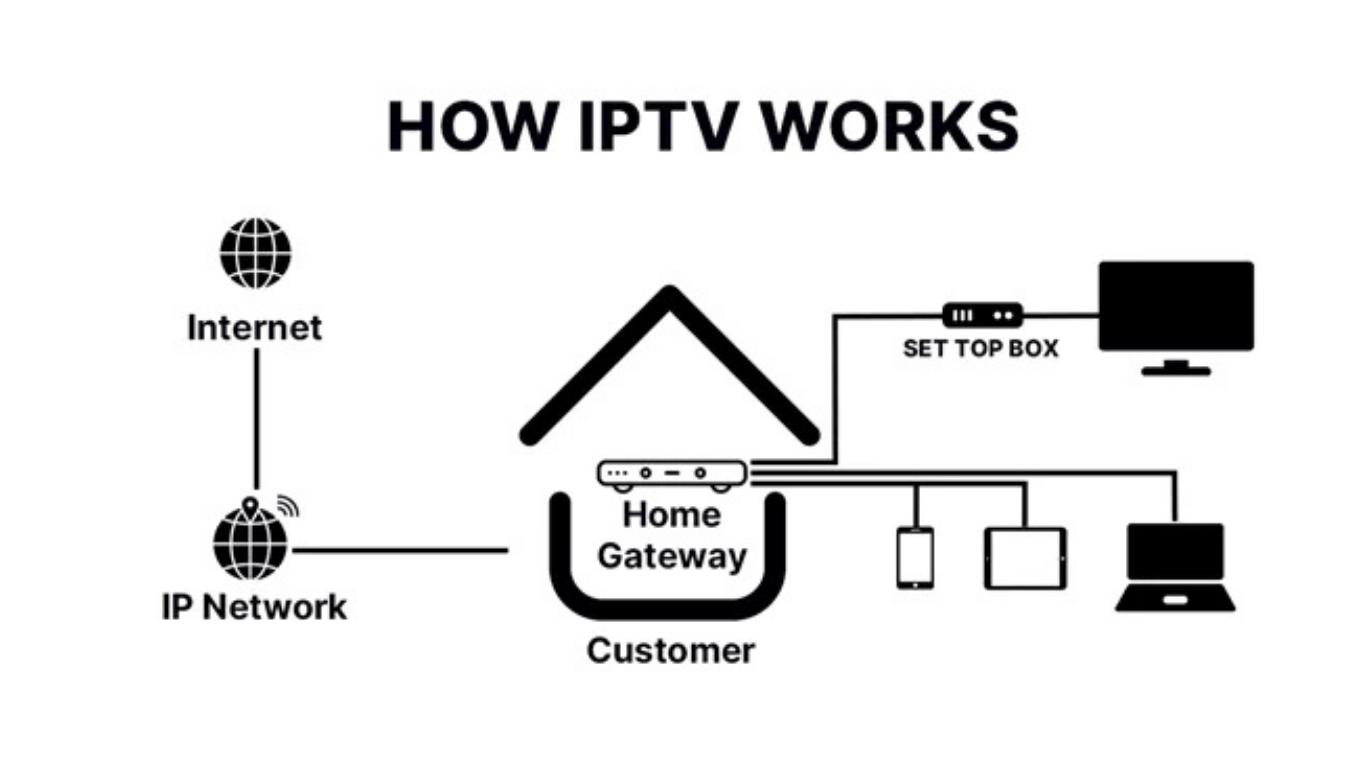
How IPTV Technology Works
The technology behind IPTV involves several components working together to deliver smooth streaming.
1. Content Acquisition
Television channels and media content are collected from broadcasters and content providers.
2. Encoding
Video files are compressed into digital formats that reduce bandwidth while maintaining high picture quality.
3. Content Servers
The encoded media is stored on secure streaming servers capable of delivering thousands of streams simultaneously.
4. Internet Delivery
The content is transmitted across IP networks using streaming protocols designed for efficient video delivery.
5. User Device
The viewer watches the content using an IPTV application or compatible player on:
- Smart TVs
- Android TV Boxes
- Amazon Firestick
- Smartphones
- Tablets
- Windows or Mac computer
Types of IPTV Services
Live Television
Live TV allows viewers to watch television channels in real time, similar to traditional broadcasting.
Popular examples include:
- News
- Sports
- Entertainment
- Children's channels
- International channel
Video on Demand (VOD)
VOD lets users choose movies and television series whenever they want without waiting for scheduled broadcasts.
Benefits include:
- Pause
- Resume
- Fast forward
- Rewind
Catch-Up TV
Catch-Up TV enables viewers to watch programmes that were previously broadcast.
Instead of recording content manually, users simply select the programme from previous days.
Time-Shifted Television
Time-shifted television allows viewers to pause live broadcasts and continue watching later.
This feature is especially useful during live sporting events or breaking news.
Advantages of IPTV Technology
Greater Flexibility
Unlike traditional television schedules, IPTV allows viewers to watch content according to their own timetable.
High-Quality Streaming
Modern IPTV platforms support:
- HD
- Full HD
- 4K
- In some cases, 8K streaming
The available quality depends on internet speed and source content.
Multi-Device Support
One of the biggest strengths of IPTV is compatibility with multiple devices.
You can watch television on:
- Smart TVs
- Firestick
- Android TV
- Smartphones
- Tablets
- Computers
Large Content Libraries
- Thousands of live channels
- Movies
- TV shows
- International programming
- Sports packages
Interactive Features
Many platforms include:
- Electronic Programme Guides (EPG)
- Search functions
- Favourite channels
- Recording options
- Multiple language support
IPTV vs Traditional Cable TV
Internet Speed Requirements for IPTV
For the best viewing experience, a stable broadband connection is recommended.
Typical guidelines are:
- SD Quality: 5 Mbps
- HD Quality: 10 Mbps
- Full HD: 20 Mbps
- 4K Streaming: 25 Mbps or higher
A wired Ethernet connection often provides the most consistent performance.
Devices Compatible with IPTV
Modern IPTV services support a wide range of hardware, including:
- Amazon Fire TV Stick
- Android TV Box
- Smart TVs
- Google TV
- Apple TV
- Windows PC
- Mac
- Android phones
- iPhone
- Tablets
This flexibility allows users to enjoy television from virtually anywhere
Common IPTV Streaming Protocols
Several technologies help deliver reliable streaming, including adaptive streaming protocols and IP-based delivery methods that adjust video quality according to network conditions. Managed IPTV deployments may also use multicast for efficient live television distribution.
These technologies help reduce buffering while maintaining smooth playback.
Security in IPTV
Modern IPTV providers implement security measures that may include:
- User authentication
- Secure streaming connections
- Content encryption
- Subscription management
- Server redundancy
These technologies help improve reliability and protect authorised access.
The Future of IPTV Technology
The popularity of IPTV continues to grow as broadband infrastructure improves and viewers increasingly prefer internet-delivered television. Industry developments are focused on better streaming quality, improved personalisation, enhanced compression technologies, and broader integration with smart home devices.
As internet speeds increase worldwide, IPTV is expected to remain a major part of the future television landscape.
Choosing the Right IPTV Service
- Streaming stability
- Channel selection
- Video quality
- Device compatibility
- Electronic Programme Guide
- Customer support
- Trial availability
- Regular service updates
Also ensure the provider has the necessary rights to distribute the content you intend to watch, as not all IPTV services are licensed.
Frequently Asked Questions
What does IPTV stand for?
IPTV stands for Internet Protocol Television, a technology that delivers television content over IP networks rather than through traditional cable or satellite systems.
Is IPTV better than cable TV?
It depends on your needs. IPTV offers greater flexibility, multi-device support, and on-demand features, while cable television may be preferred where internet connectivity is limited.
Can I watch IPTV on multiple devices?
Many IPTV services support Smart TVs, smartphones, tablets, streaming devices, and computers, although the number of simultaneous streams depends on the subscription.
Does IPTV require fast internet?
A stable broadband connection is recommended, particularly for HD and 4K streaming.
Is IPTV legal?
The technology itself is legal. Legality depends on whether the service provider has the appropriate licences to distribute the content.
Does IPTV support live sports?
Many licensed IPTV services include live sports channels, subject to broadcasting rights in the relevant region.
Conclusion
IPTV technology has transformed the way people watch television by combining the flexibility of internet streaming with the familiarity of traditional TV. From live channels and video on demand to catch-up services and multi-device compatibility, IPTV provides a modern viewing experience that suits today's connected households.
As broadband networks continue to improve and streaming technologies evolve, IPTV is likely to remain a key part of the future of digital entertainment. When choosing a provider, prioritise reliability, device compatibility, streaming quality, and properly licensed content for the best experience.